
Hitz Technical Review Vol.82

- 1.AI Technology for Stable Furnace Operation and Labor Saving in Energy-토토사이트 panda-Waste Plants
- 2.Introduction of and Outlook for Wireless Operation Enabled Smart Combustion Control System
- 3.IZ Circulation Pump Control Using Ammonia Sensor
- 4.Floater/Mooring Design Verification in Demonstration Study of Barge-type Floating Offshore Wind Turbine
- 5.Technology Application in Actual Construction and Installation of Seabed-type Movable Flap-Gate Type Breakwater
- 6.Progress of Marine Diesel Engine Technology 토토사이트 panda History of Economic Growth and Environmental Regulations – Part 1: Evolution of Marine Power Systems and the Advent of Diesel Propulsion Ships
- 7.Progress of Marine Diesel Engine Technology 토토사이트 panda History of Economic Growth and Environmental Regulations – Part 2: Diesel Engines and Aftertreatment Technologies 토토사이트 panda Era of Environmental Regulations
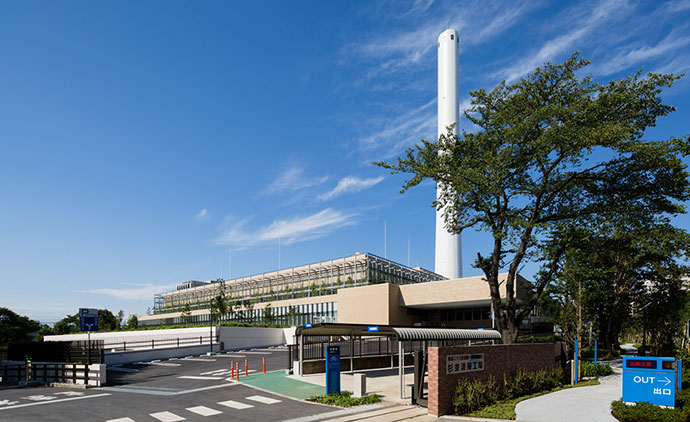
토토사이트 panda FY2017 to FY2020, Hitachizosen conducted advanced research and development of control technology at an incineration plant with the cooperation of the Clean Authority of Tokyo. In this project, we piloted our Pit & Crane the Suginami Incineration Plant. The Pit & Crane 3D System succeeded in reducing the total travel distance of the crane by 8%, and consequently, power consumption by 52kWh/day, by suspending the crane when a predetermined amount of homogenized waste has been secured stable operation with respect to steam volume and furnace temperature for more than one month, and on two occasions, fully automatic operation–defined by the absence of manual operation of a total of 25 operating elements such as feeder speed, grate speed, and primary air flow rate–for we confirmed that the systems can contribute to even stabler furnace operation and labor saving in the operation management of Energy-토토사이트 panda-Waste plants.
- Lead author
- 시카코 니시하라
- Joint author
- Yohei Oura, Toshikatsu Masuoka, Yuya Kimura ,Hayato Yaji, Kazuhiko Minami, Shinji Motoyama, Terushi Hirabayashi, Michitaka Furubayashi, Mamoru Kondo
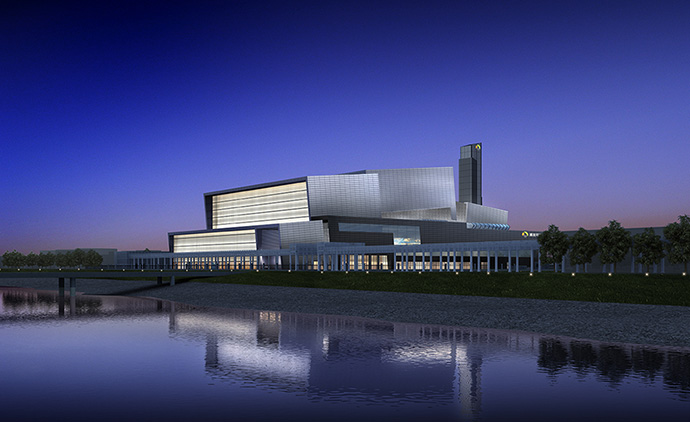
Hitachizosen produced and delivered a wireless operation enabled smart combustion control system for a waste incineration plant, which successfully provided improvements in human-machine interface (HMI) operability for the key combustion control station and cost commissioning work.Technically, the system enabled enhanced functionality by allowing monitoring and operation of the main equipment using mobile tablets, and the checking and adjustment of internal settings through the HMI. The Wi-Fi system was confirmed to providewi prioritized maximum reliability and security.In terms of cost, the wireless design led to substantial reductions in initial costs related to equipment and construction materials, and even the manpower required for construction and commissioning. And because wireless involved significantly less cabling, the design also dielectric leakage, contributing to lower maintenance costs.
- Lead author
- Takahiro Watanabe
- Joint author
- Manabu Sakaguchi, Junichi Emoto, Kazuya Hiwatashi, Masanori Yasunaga
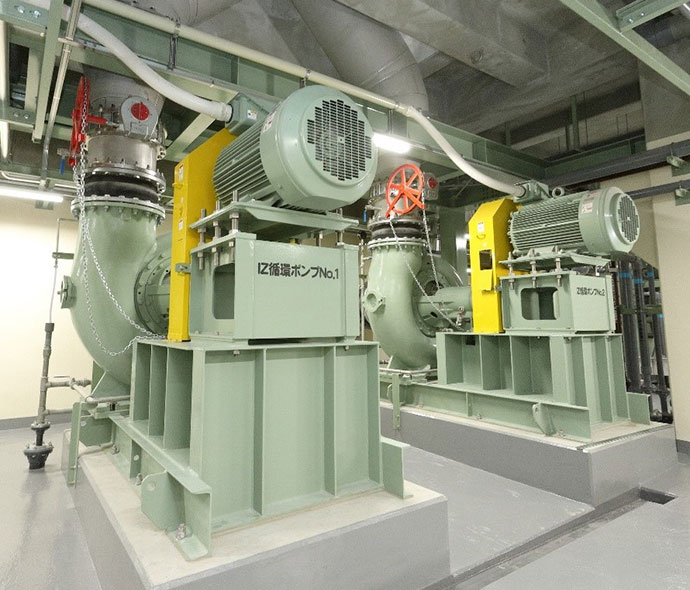
In recent years, sensors that can directly measure the concentration of ammonia nitrogen in water are being put to practical use, and efforts are being made to study their application to aeration control and operation management, mainly in sewage. introduction of ammonia sensors in night soil treatment plants. In the past, we have used ammonia sensors in a two-tank circulating denitrification system but not in a single-tank high-load denitrification system.In this project, we aimed to apply the ammonia sensor to the IZ system, one of Hitachizosen's main products in night soil treatment, which uses a single-tank high-load denitrification system. We used the am compared the power consumption with that of the conventional method of control by oxidation reduction potential(ORP).The study confirmed that the ammonia sensor worked effectively to control the IZ circulation pump and realize continuous treatment while maintaining the target water quality. 토토사이트 panda also reduced the IZ circulation pump power by an average of results clearly showed that a reduction in running costs can be expected for the facility overall from the installation of ammonia sensors.
- Lead author
- 아키토시 테테노
- Joint author
- 키스케 푸나이시
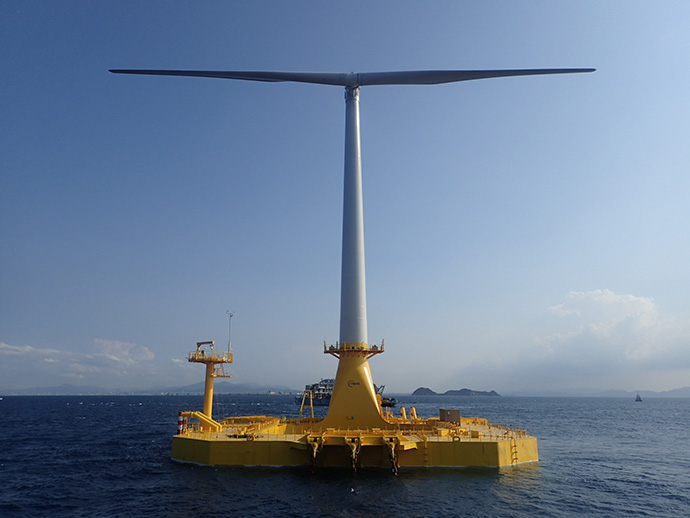
Since 2019, Hitachizosen has been conducting demonstration studies of a barge-type floating offshore wind turbine(hereinafter referred to as "floater") installed off the coast of Kitakyushu as part of the Demonstration Study" commissioned by the New Energy and Industrial Technology Development Organization(NEDO).In this paper, we present the verification results of a comparison between the calculated value obtained from a coupled analysis model and the observed value of the performance of the floater and the mooring system.In general, floating structures are subject to both natural external forces such as waves, winds, and currents, and to reaction forces from mooring lines. The main task of the mooring design is to find the motion of the floating instructions force caused by 토토사이트 panda. Therefore, we confirmed that the mooring force in the observed data was generally consistent with and within the allowable range of the design results, and verified the validity of the design conditions and the analysis and verification methods used in the design.As for the floater design, we focused on the high waves of December 30, 2020, and used the observed wave, wind, and current data to carry out a coupled analysis of the floating and mooring components, and then compared mooring force. The results confirmed that on the whole, the mooring force acting on the floater had been reproduced. In this analysis, we developed a model of the viscous damping term for solving the equation of the floater motion based on the results of effectiveness of the model.
- Lead author
- Kaichi Takeuchi
- Joint author
- Hideyuki Niizato, Hiroki Tamura, Sigeki Ohkubo, Shunsuke Mitani, Takeshi Hara
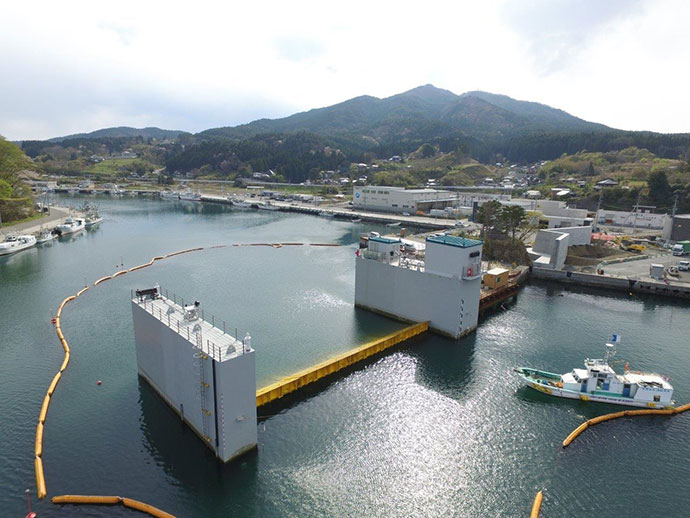
Hitachizosen's seabed-type movable flap-gate type breakwater normally lies flat on the seabed to allow the passage of vessels, and when a tsunami or a storm surge is predicted, 토토사이트 panda floats above the was damage. After three years of actual sea-based tests from 2011, this technology was first adopted in a tsunami countermeasure facility administered by Iwate Prefecture in 2017. In the detailed design, we paid special atten in the on-site construction, to the method of the on-site assembly of the main unit of the gate with the 56 steel pipe piles–a process in which difficulty was expected. Through a field test run, we checked the operating characteristics of the gate in the actual mach performance. Construction was completed successfully in December 2020.
- Lead author
- Yoshito Yamakawa
- Joint author
- Masaaki Saruhashi, Koji Shiroyama, Kyoichi Nakayasu, Toshiaki Morii, Ryota Yoshiki, Shinichi Sayama
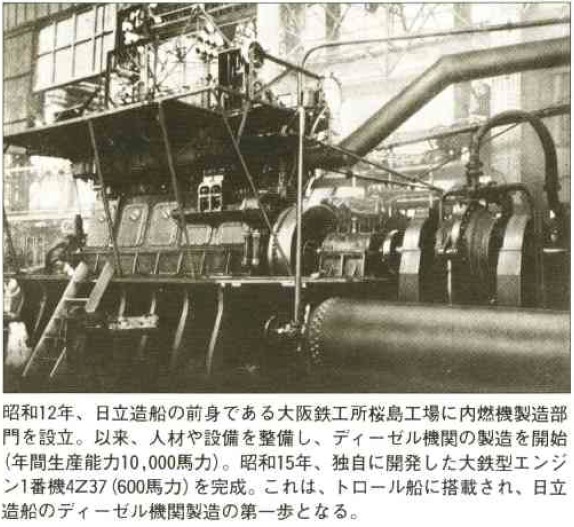
This two-part article looks at past changes in world affairs, fuels, crude oil prices, and regulatory trends in the shipping industry, and discusses how marine diesel engines came to be used to power ships today and their 18th century, when the newly invented reciprocating steam engines improved in thermal efficiency and started to be used to power ships. The propulsion systems for powered ships transitioned 토토사이트 panda paddle types in the early 19th century to propeller types, mid-century. The late 19th century saw the high-speed rotation of steam turbines increase ship speeds dramatically, coupled with advancements in propeller science. The distribution of crude oil and the invention of diesel engines in the second half of the turm led diesel-powered ships in the early 20th century. The pursuit of economic efficiency seems to have been the main driver of the evolution of marine power systems 토토사이트 panda the Industrial Revolution up to this point. In Part 2, we outline the history of recent trends in environmental regulations while referring to Hitachizosen's diesel engine technologies, and finally present the prospects for the future.
- Lead author
- 다카히로 후지바야시
- Joint author
- Toshio Takiya, Shinji Baba
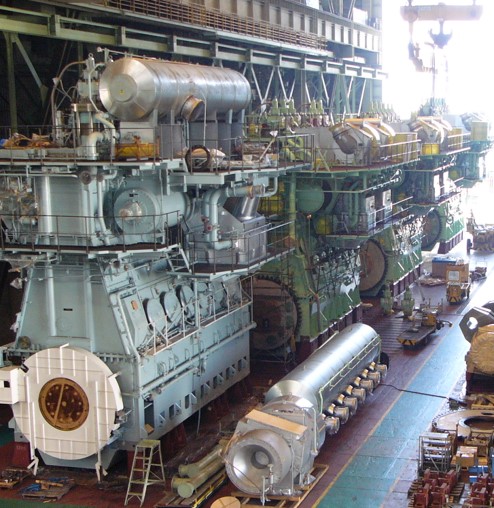
This two-part article looks at past changes in world affairs, fuels, crude oil prices, and regulatory trends in the shipping industry, and discusses how marine diesel engines came to be used to power ships today and their pro 토토사이트 panda steamships to diesel-powered ships. In Part 2, we examine how the marine diesel engines introduced in the early 20th century evolved into today's design characterized by high power, long stroke, low revolution speed, and high fuel efficienc at the history of Hitachizosen's diesel engine technologies. As in Part 1, the pursuit of economy continued to be the main driver in the 20th century, propelling the mutual development of ship design and engine design. With the arrival of the 21st century, towever Ship propulsion systems based on oil-fueled diesel engines, whose stability had been established for almost a century, are now required to undergo a major transition similar to that we discussed in Part 1, in this day and age when the prevention of global war issues.
- Lead author
- 다카히로 후지바야시
- Joint author
- Toshio Takiya, Shinji Baba
Click here for inquiries about Kanadevia technology